
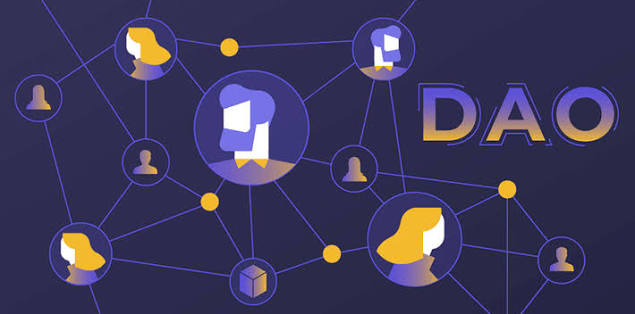
Since the rise of blockchain technology, decentralization has expanded far beyond cryptocurrencies and financial services. It now challenges the way companies, communities, and online projects can be organized. This is where DAOs, or Decentralized Autonomous Organizations, come into play. Instead of relying on a traditional management team, some decisions can be submitted directly to members and recorded on a blockchain. On paper, the idea resembles a new form of digital democracy. In reality, things are more complicated.
A DAO usually relies on smart contracts that define part of its operating rules. Members can manage a shared treasury, finance new projects, or vote on changes to a protocol. A proposal is submitted to the community, discussed, and eventually put to a vote. Depending on the DAO, voting power can be linked to the number of tokens owned, delegated to another member, or calculated through other mechanisms. The main idea remains the same: replace part of the traditional hierarchy with transparent rules and collective decision-making.
Transparency is probably one of the strongest arguments in favor of this model. In a traditional company, customers or users rarely know exactly how strategic decisions are made. With a DAO, proposals, votes, and treasury transactions can often be consulted publicly on the blockchain. A member can therefore verify a result without relying entirely on a central authority. This creates a very different relationship between an organization and its community. Trust does not disappear, but part of it shifts from people and institutions toward technology and publicly available information.
DAOs also make international collaboration much easier. A developer in France can contribute alongside a designer in Japan and a marketing specialist in the United States without sharing the same office or even the same legal structure. Contributors can be paid in cryptocurrencies or stablecoins, while communication takes place through platforms such as Discord, forums, and governance applications. This flexibility fits particularly well with the Web3 economy, where remote and asynchronous work is already common. A contributor can even become involved in the strategic direction of the project, something that a traditional freelancer rarely experiences with a client.
However, describing DAOs as direct democracies can quickly become misleading. In many organizations, members do not have equal voting power. The common principle of “one token, one vote” means that investors with large portfolios can potentially influence decisions much more than smaller contributors. Someone holding thousands of governance tokens may have more voting power than hundreds of community members combined. This creates an interesting contradiction: an organization designed to decentralize power can ultimately concentrate it in the hands of a few wallets.
Participation is another major issue. Having the right to vote does not necessarily mean that people will actually use it. Governance proposals can be technical, time-consuming, and sometimes difficult to understand. Members may simply stop participating after a few votes. In that situation, a relatively small group of active participants ends up making decisions for a much larger community. In practice, this is not so different from traditional democratic systems. Participation requires time, knowledge, and motivation.
Some DAOs have introduced delegation to address this problem. Token holders can transfer their voting power to another member who has more expertise or more time to study proposals. This makes governance more efficient, but it also creates a new type of representative system. Certain delegates can gradually accumulate considerable influence. Essentially, removing managers from an organizational chart does not automatically remove power relationships; they simply appear in a different form.
Technology itself introduces another difficulty. DAOs depend heavily on smart contracts, and smart contracts are still software. If the code contains a vulnerability or if a governance mechanism has been poorly designed, the consequences can be serious. Blockchain history has already shown that decentralized organizations can face exploits involving significant amounts of money. When this happens, the community faces an uncomfortable question: should it respect what the code allowed, or should humans intervene to correct the result? This is where the famous idea that “code is law” becomes much harder to defend.
The legal framework adds another layer of complexity. A traditional company has a legal identity, identified directors, and relatively clear responsibilities. With an international DAO, responsibility can become much harder to determine. If a collective decision causes financial damage, who should be held accountable? The developers, the token holders, the people who voted, or those controlling the main interface? There is no universal answer. The applicable law depends on the structure of the organization and the jurisdiction involved. For this reason, some DAOs create traditional legal entities alongside their decentralized governance systems.
Governance is also an economic issue. Some DAOs control significant treasuries that can be used to finance developers, marketing campaigns, acquisitions, or new products. A poor collective decision can therefore have consequences similar to those of a bad decision made by the management of a traditional company. The difference is that thousands of voters may have very different objectives. Some want to develop the project over several years, while others mainly want the token price to increase quickly. Aligning all these interests is probably one of the hardest challenges of decentralized governance.
For e-commerce, the concept remains particularly interesting. A brand could use DAO-inspired mechanisms to involve customers in decisions about new products, collections, or community benefits. Imagine a loyalty program where customers do not simply accumulate points but can also vote on certain decisions. The relationship changes: consumers become more involved in the ecosystem surrounding the brand. However, companies need to be careful. Giving customers a token without granting them meaningful influence could quickly turn governance into another marketing tool rather than genuine participation.
This is why decentralization should not be measured only by the presence of a blockchain or a governance token. Several elements matter: how tokens are distributed, how many members actually vote, who can modify the protocol, who controls the treasury, and whether a small group can block or impose decisions. A DAO can be technically decentralized while remaining highly centralized from a governance perspective. In my opinion, this distinction is essential when evaluating whether a project truly follows the principles it promotes.
So, are DAOs a form of direct democracy or digital anarchy? The answer probably lies somewhere in between. They offer a new way to coordinate people, manage digital resources, and make decisions more transparent. At the same time, they do not eliminate traditional problems such as concentration of power, low participation, conflicting interests, and legal responsibility. Their real value may not lie in their ability to completely remove hierarchy, but rather in their capacity to experiment with new governance models. If DAOs are to become sustainable organizations, they will need to find a balance between automation, human decision-making, economic incentives, and the law.


