
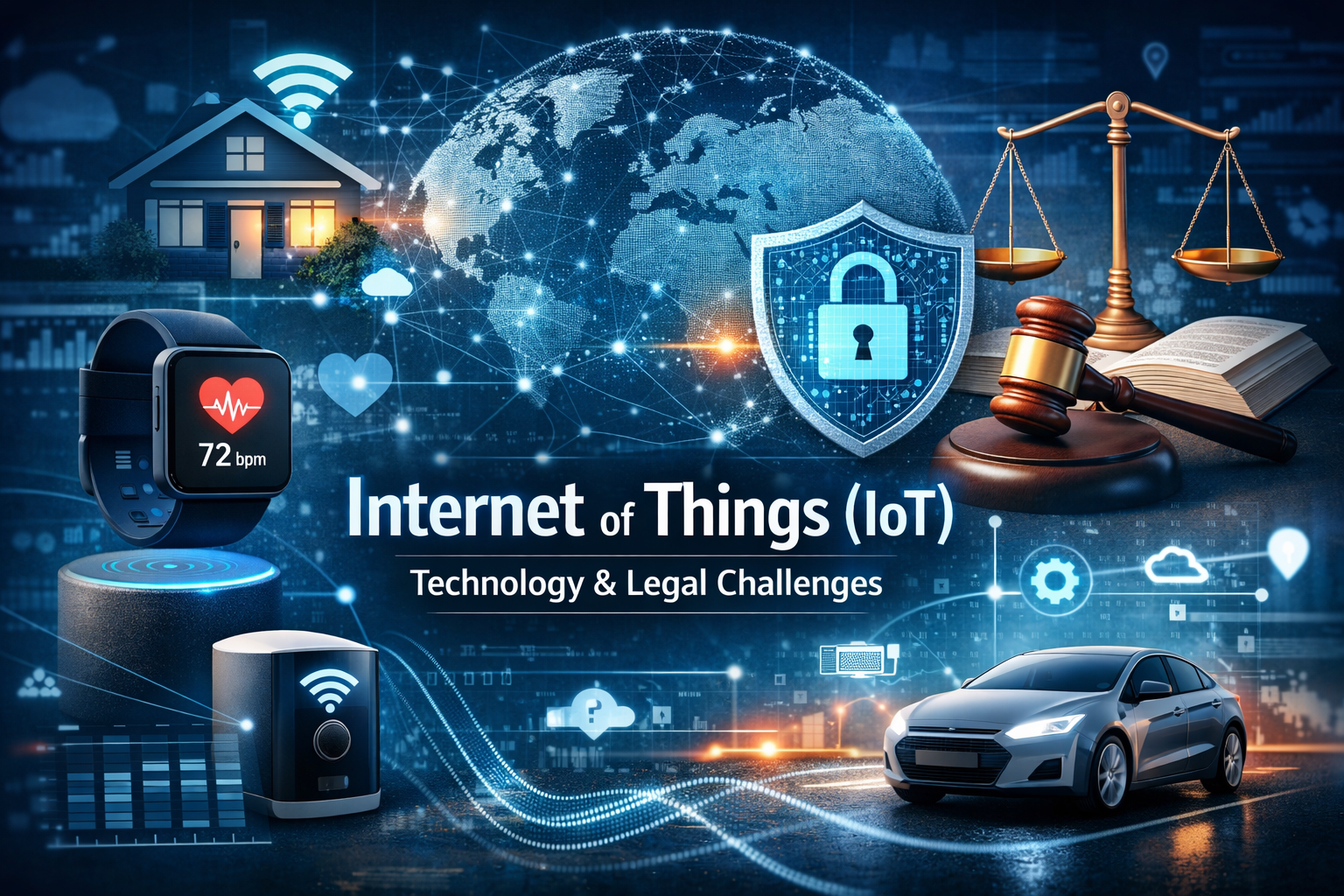
The Internet of Things, commonly referred to as IoT, represents one of the most significant developments in the ongoing digital transformation. Connected devices are technologies capable of collecting, transmitting, and sometimes analyzing data through the Internet or other communication networks. Today, these technologies are present in many areas of everyday life, including smart homes, healthcare, transportation, industry, and agriculture. While these innovations offer many opportunities, they also raise important technical and legal challenges.
Connected devices rely on a technological architecture composed of several key elements. First, sensors collect information from the environment or from the user. These data may include temperature, location, heart rate, or consumption habits. Next, the information is transmitted through various communication protocols such as Wi-Fi, Bluetooth, 4G, or 5G networks. The data are usually sent to remote servers or cloud computing platforms where they can be stored, processed, and analyzed. Finally, users are able to access this information through mobile applications or web interfaces.
However, the rapid growth of connected devices creates several technical challenges. One of the most important issues concerns cybersecurity. Each connected device can represent a potential entry point for cyberattacks. Hackers may exploit security vulnerabilities to gain access to personal data or even take control of a device. In some cases, thousands of connected devices can be used to launch large-scale cyberattacks, such as distributed denial-of-service attacks (DDoS). For this reason, implementing strong security mechanisms, such as data encryption and multi-factor authentication, has become essential.
Another technical challenge involves data management and processing. Connected devices generate an enormous amount of information, commonly referred to as “big data.” Companies must rely on infrastructures capable of storing and analyzing these data in real time. This requires powerful cloud computing solutions as well as artificial intelligence technologies. In addition, interoperability between devices remains a major challenge. Connected objects are often produced by different manufacturers and rely on different technical standards, which can make communication and integration within the same system more difficult.
Beyond technical considerations, connected devices also raise significant legal concerns. The collection of personal data is one of the main issues. Many connected devices record sensitive information about users, such as their location, health data, or daily habits. In this context, protecting privacy and ensuring that data are used transparently and securely is essential.
In Europe, personal data protection is regulated by the General Data Protection Regulation, which imposes several obligations on companies. Organizations must inform users about the collection of their data, obtain their consent, and guarantee the security of stored information. If these rules are violated, companies may face significant financial penalties.
Legal liability is another important issue. In the event of a malfunction of a connected device, it can be difficult to determine who is responsible for the damage: the manufacturer of the device, the software developer, or the user. This question becomes particularly critical in sectors such as healthcare or transportation, where technological failures can have serious consequences.
Finally, the development of connected devices raises broader questions about the future regulation of digital technologies. Public authorities must find a balance between encouraging technological innovation and protecting citizens. At the same time, companies must integrate security and privacy principles into the design of their products in order to maintain user trust.
In conclusion, connected devices represent a major step forward in the development of the digital economy. They create new opportunities to improve comfort, efficiency, and productivity across many sectors. However, their widespread deployment also brings significant technical and legal challenges, particularly in terms of cybersecurity, data management, and privacy protection. In order for the Internet of Things to develop in a sustainable and responsible way, it is essential to strengthen security measures, improve technical standards, and establish an appropriate legal framework.
sources:
https://commission.europa.eu/law/law-topic/data-protection_en
https://www.cisco.com/c/en/us/solutions/executive-perspectives/annual-internet-report/index.html
https://www.gartner.com/en/information-technology/glossary/internet-of-things-iot


