
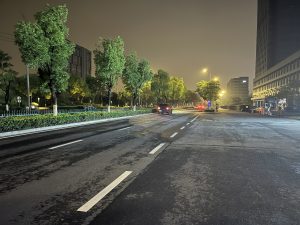
Have you seen those short videos on social media showing what life might look like in the future? Chances are, you have. When scrolling through your feed, it’s common to come across futuristic scenes set in places like Dubai or Shenzhen in the year 2070. You’re cruising down Sheikh Zayed Road or Binhai Boulevard when suddenly, the car in front of you lifts off like a helicopter and lands at the office building where the passenger works. Sounds like a dream, right?
Smart Driving Makes Life Easier
Imagine a world where you don’t have to lift a finger while commuting. With autonomous driving, traffic jams become less stressful—no need to worry about accelerating, braking, or navigating complex intersections. Even finding a parking spot becomes effortless, thanks to integrated software that scans availability in real-time. You could even sneak in an extra nap on the way to work if you didn’t sleep well the night before.
Now take that a step further. Combine self-driving tech with autonomous drone systems and your “car” becomes even smarter. Stuck in traffic? No problem. Your flying vehicle lifts off, navigates to your office tower, drops you off at your floor, and flies away to park itself. Half an hour before you’re done with work, you call it back with a tap. Once you’re done for the day, hop in—and before dinner with your family, you can catch another power nap. Pretty cool, right?
But We’re Not Quite There Yet
Of course, all this sounds amazing—if you’re the only one using it. In reality, there’s still a long way to go before this kind of tech is safe and practical for everyone.
First, even with self-driving features, humans still need to be able to take over. We can’t yet rely 100% on software to handle every unexpected situation. And with flying vehicles, the risks are even higher. Most people don’t know how to fly a drone, let alone take control in an emergency mid-air.
Second, cybersecurity is a serious concern. If someone were to hack into one of these vehicles, they could hijack it, putting lives at risk. Worse, such tech could be weaponized—imagine a future version of a 9/11-style attack using smart vehicles. That’s why secure identity verification and trustworthy command systems must be built into every unit.
Accountability Must Be Clear
Lastly, we need clear rules about who’s legally responsible if something goes wrong. Before smart vehicles hit the mass market, we need to figure out exactly who’s liable in the event of an accident—whether it’s the driver, the manufacturer, or the software developer.


