
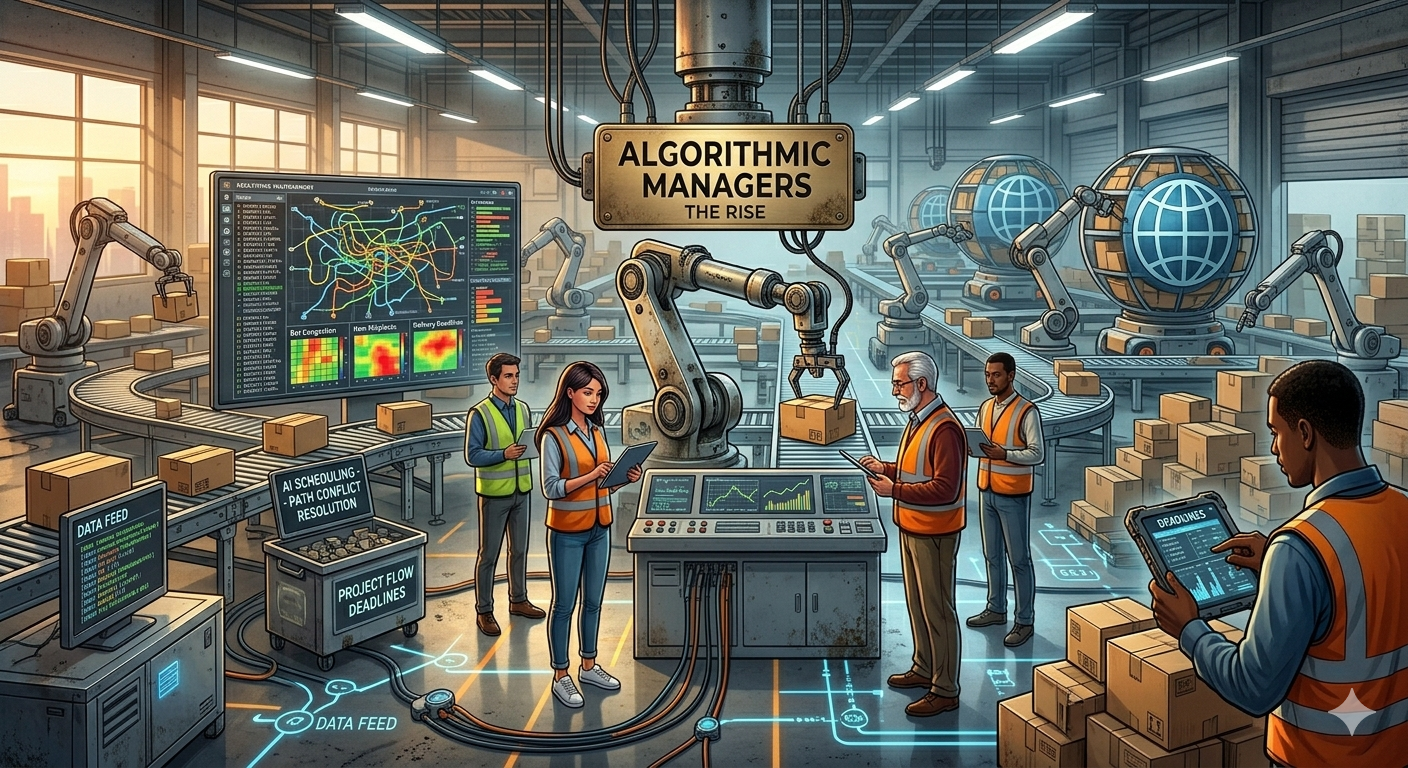
Algorithmic management refers to the use of software, often driven by artificial intelligence, to automate or support decisions traditionally made by human managers including assigning tasks, evaluating performance, and monitoring worker behavior. This shift began in the platform and gig economy but is now spreading into mainstream businesses across industries.
Algorithmic managers use extensive data collection and real-time analysis to assign work, schedule shifts, and even issue feedback to employees. These systems can coordinate very large, decentralized teams, enabling companies like Uber, Amazon, and many logistics firms to optimize workforce deployment at scale.
Improved efficiency through automated decision-making and real-time assignments. Objective and consistent application of rules, helping to reduce human bias. Better use of data to improve productivity, resource allocation, and performance evaluation. Enhanced ability to track and optimize complex operations, especially for large, distributed teams.
Increased surveillance and data collection raise concerns about worker privacy and autonomy. Automated decisions can be opaque, making it hard for employees to contest unfair treatment or understand how they are being evaluated. The pace and intensity of work can increase, leading to stress and reduced job satisfaction. Potential erosion of traditional workplace relations and employee bargaining power.
Ride-hailing platforms like Uber or Lyft : Algorithms match drivers and passengers, monitor ride efficiency, and assign ratings. Amazon: Warehouse workers’ tasks and break times are optimized and monitored by algorithms for peak efficiency. Retail and services: Automated scheduling software assigns shifts based on predicted demand, reducing human input and sometimes leading to last-minute changes. Logistics companies like UPS optimize delivery routes in real time, minimizing delays and maximizing productivity.
One way to make algorithmic management more human is to design it around people’s lives, not just productivity targets. Algorithms could be tuned to respect reasonable working hours, allow for breaks that feel natural rather than robotic, and adapt to personal circumstances like childcare or health issues especially when workers can flag such needs in a simple, transparent way. When employees feel that the system listens to them and leaves room for flexibility, they are more likely to see algorithms as tools that support their work rather than as invisible bosses constantly pushing them to go faster. This human‑centered approach would not only reduce stress but also strengthen trust in the technology itself, turning algorithmic management into a partner in dignified work rather than a source of silent pressure.
Beyond the numbers and metrics, algorithmic management is changing not just how work is organized but also how people feel about being managed. In many workplaces today, employees interact more with an app on their phone or tablet than with a real human manager, which can make work feel more impersonal and distant. This shift can erode informal support, mentoring, and the kind of empathy that comes from face‑to‑face conversations, yet some workers welcome the consistency and perceived fairness of algorithmic rules compared to what they see as arbitrary or biased human decisions. This tension between the comfort of a predictable system and the need for human understanding reveals a deeper question about the kind of workplace culture we want to build.
Looking ahead, the long‑term success of algorithmic management will depend less on technology alone and more on how we choose to govern it. Companies can protect both performance and people by setting clear limits on surveillance, making algorithmic decisions easier to understand, and giving employees real avenues to challenge or review outcomes. Human oversight, collective representation, and regulatory frameworks will be crucial to ensure that algorithms serve workers as much as they do profits. In this way, algorithmic management can evolve into a more humane form of leadership, one where technology supports collaboration, respect, and fairness rather than replacing the human touch altogether.
Algorithmic managers promise significant productivity gains, but their rise brings new questions about fairness, transparency, and the future of work. Achieving a balanced workplace will require not just technological innovation but also policies and practices that protect workers’ rights and well-being as algorithmic management continues to evolve.
Sources:
https://www.thrivesparrow.com/hr-glossary/algorithmic-management
https://datasociety.net/wp-content/uploads/2019/02/DS_Algorithmic_Management_Explainer.pdf
https://en.wikipedia.org/wiki/Algorithmic_management
